Is composite decking more expensive than wood?
The initial installation generally costs more. Over a longer ownership period the maintenance difference narrows the gap, but the up-front number is higher.
Composite Decks · Northern Virginia
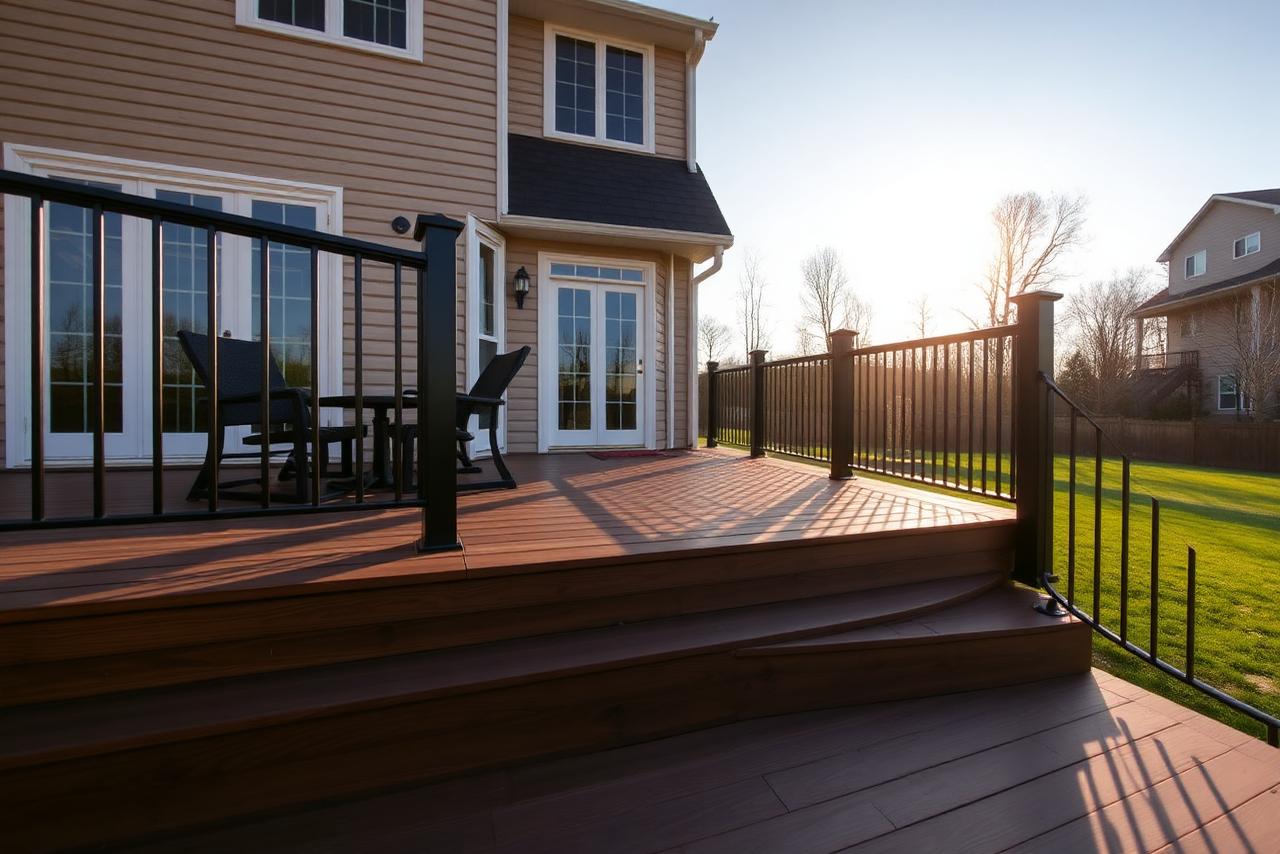
Composite decking is the most requested surface we install — no sanding, no sealing, and a consistent look that holds up through Virginia summers and winters.
Composite boards do not need annual sealing, resist splintering, and keep their color far longer than stained wood. The trade-off is a higher initial investment and a surface that runs warmer in direct sun than lighter woods.
Standard composite blends wood fiber with polymer and offers the widest range of colors at a moderate price. Capped PVC contains no wood fiber, weighs less, and typically carries the strongest stain and fade performance, at a higher cost per square foot.
Composite performs best over correctly spaced, sound framing with proper drainage and expansion gaps. We frame in pressure-treated lumber, use hidden fasteners where the product allows, and finish edges with matching fascia.
Deck size, material selection, framing condition, deck height, stair runs, railing type, demolition, site access, drainage, and design complexity all move the number.
Displayed prices are general Northern Virginia planning ranges and are not guaranteed estimates. Final pricing depends on dimensions, materials, framing condition, deck height, stairs, railings, demolition, property access, drainage, design complexity, engineering, permit requirements, HOA requirements, and the final written scope of work.
New decks designed for your yard, grade, and door heights.
Low-maintenance composite and PVC surfaces with matching trim.
Pressure-treated and cedar decks at a lower entry cost.
Boards, stairs, railings, and framing repairs after an on-site look.
New surface and railings over framing that is still sound.
Aluminum, cable, composite, and wood railings plus stair runs.
Full rebuilds when repair is no longer the practical option.
Paver and stone patios, walkways, and deck-patio combinations.
Pergolas, privacy walls, built-in benches, and deck framing.
We talk through how you want to use the space, rough size, materials you like, and the budget range you are planning around.
On site we look at grade, door heights, access, drainage, and — for existing decks — the condition of framing, posts, and stairs.
Footprint, stair placement, railing style, and decking selections are settled before pricing is finalized.
You get a written scope of work that states what is included so the number is tied to something specific.
Requirements depend on the property, jurisdiction, and scope. We confirm what applies to your project and what we will handle before work begins.
Framing, decking, stairs, railings, and any built-in features, with the site cleaned at the end of each phase.
We walk the finished deck with you, review care instructions for the material you chose, and close out any punch items.
The initial installation generally costs more. Over a longer ownership period the maintenance difference narrows the gap, but the up-front number is higher.
Sometimes. Joist spacing, span, and framing condition all have to support the product before that is a safe recommendation.
Modern capped composite fades far less than older generations. Exact performance varies by product line, so we review the manufacturer's published information with you rather than making a claim on their behalf.
Most composite lines offer gray, brown, and warm wood-tone families with matching or contrasting railing options. We bring samples to the design meeting.
Tell us about the space, the materials you are considering, the approximate size, and how you want to use it. We will review the project and explain the next steps.